Signs a Snow Day Is Coming (How to Predict It Accurately)
If you’ve ever stayed up checking the forecast and hoping to wake up to “School’s closed,” you’re not alone. But predicting a snow day is not just luck. There are clear weather patterns, official signals, and local clues that can help you figure it out ahead of time.
This guide goes beyond simple guesses. You will learn how to predict a snow day using real indicators, scientific signals, and patterns that schools actually rely on.
🎯 What Is a Snow Day and How Do Schools Decide?
A snow day happens when schools close due to unsafe conditions. Many people assume it is only about snowfall, but the decision is more complex.
School districts consider transportation safety first. Buses must travel safely on roads that may be icy, snow-covered, or hard to see through during storms. Even a small amount of snow can cause closures if it leads to dangerous driving conditions.
Timing also plays a major role. If heavy snow falls overnight and continues into the morning commute, the chances of a snow day increase significantly. When forecasts are uncertain, schools often wait until early morning before making a final decision.
🌨️ Understanding Winter Weather Alerts
Weather alerts are one of the strongest indicators that a snow day may be coming. However, many people misunderstand what these alerts actually mean.
A winter storm warning signals severe conditions that are likely to make travel dangerous. This often leads to school closures, especially when combined with overnight snowfall.
A winter storm watch means conditions are favorable for a storm but not guaranteed. Schools may prepare for closure, but decisions are not final yet.
A winter weather advisory indicates less severe conditions. These can still cause delays or closures depending on how your area handles snow and ice.
It is also important to understand specific terms used in forecasts.
- Freezing rain creates a thin layer of ice that is often more dangerous than snow.
- Sleet forms ice pellets that make roads slippery.
- Wind chill describes how cold it feels and can lead to closures even without heavy snowfall.
🌡️ The Three Types of Signals That Predict a Snow Day
To make a reliable prediction, you need to look at multiple layers of information. Relying on just one sign can lead to wrong conclusions.
Weather signals
These include snowfall predictions, temperature, wind, and timing. For example, heavy snow overnight combined with freezing temperatures is one of the strongest indicators of a snow day.
Local and infrastructure signals
These are often overlooked but extremely important. If snowplows are working overnight or roads remain untreated, it suggests travel conditions may not improve by morning.
Institutional and social signals
School alerts, nearby district closures, and local news updates provide insight into what decisions are likely. When multiple districts begin closing, others often follow.
Which Signs Are Most Reliable?
Not all signals carry the same weight. Some are far more reliable than others when predicting a snow day.
Highly reliable indicators include:
Moderately reliable indicators include:
Less reliable indicators include:
The most accurate predictions come from combining several strong signals rather than relying on one.
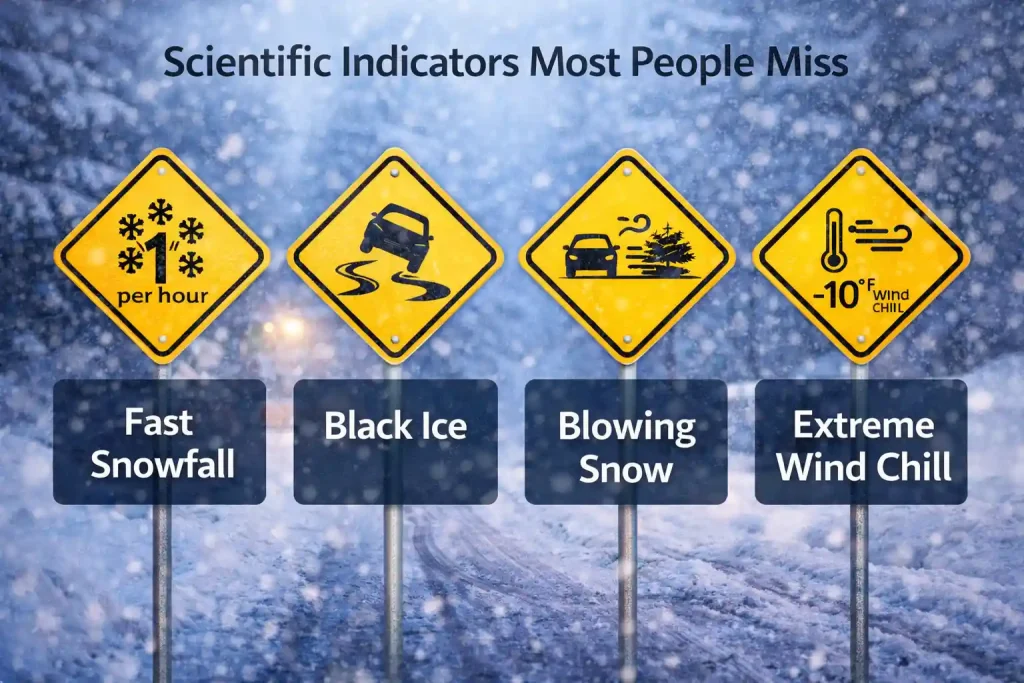
Scientific Indicators Most People Miss
Many people focus only on snowfall totals, but other factors often matter more.
Snow accumulation rate is one of them. Fast snowfall in a short period can disrupt travel more than a steady, lighter snowfall over many hours.
Overnight freezing is another key factor. When temperatures drop below freezing, melted snow can refreeze into black ice, making roads extremely dangerous.
Wind also plays a major role. Strong winds can blow snow across roads, reducing visibility and making driving unsafe even when snow totals are not very high.
Wind chill is often overlooked as well. Extremely low temperatures increase safety risks for students waiting outside or walking to school.
How to Predict a Snow Day Step by Step
A simple method can help you make a much more accurate prediction.
Start by checking the snowfall forecast and focus on how much is expected before morning. Then look at the timing of the storm. Snow that falls overnight or during commute hours has a bigger impact.
Next, check temperatures. If they stay below freezing all night, ice becomes a major concern. After that, look for official alerts such as warnings or advisories.
It is also helpful to compare multiple weather sources rather than relying on one forecast. Finally, use a snow day calculator to combine all of this data into a clear probability.
Common Mistakes People Make
Many predictions go wrong because people focus on the wrong signals.
One common mistake is looking only at snowfall totals. Timing and ice are often more important. Another mistake is assuming all regions respond the same way to snow. Local infrastructure plays a big role in whether schools close.
People also tend to trust social media too early, before official decisions are made. This can lead to false expectations.
How Early Can You Tell If a Snow Day Is Coming?
The accuracy of predictions depends heavily on timing.
A few days in advance, forecasts can change quickly, so accuracy is low. About 24 hours before a storm, predictions become more reliable. The night before is usually when you can make a strong prediction.
By early morning, decisions are finalized based on real conditions.
Why Snow Day Decisions Vary by Location
Snow day rules are not the same everywhere. Some areas are better equipped to handle snow than others.
Urban areas often have better snow removal systems, which means schools are less likely to close. Rural areas may close more frequently due to difficult road conditions.
In warmer regions, even a small amount of snow can cause closures because the infrastructure is not designed to handle it. In colder regions, schools may stay open even after several inches of snow.
The Most Accurate Way to Check Your Chances
While all these signs help, the most reliable approach is to use data.
A snow day calculator analyzes local forecasts, temperature trends, storm timing, and historical patterns to estimate your chances. Instead of guessing, you get a probability based on real conditions.
This makes it much easier to decide whether to prepare for a regular day or expect a closure.
What to Do When a Snow Day Is Likely
When multiple signs point toward a snow day, it is a good idea to prepare ahead of time. Parents can plan childcare or adjust schedules, while students can start looking forward to a break from routine.
You can also decide how you want to spend the day. If you have kids at home, explore some fun snow day activities for kids to keep them engaged, creative, and off screens.
For adults, it can be a great opportunity to relax or be productive with snow day activities for adults at home, whether that means catching up on work, organizing your space, or simply unwinding.
Snow days can be both relaxing and meaningful when you plan them well, instead of figuring things out at the last minute.
Final Thoughts
A snow day is rarely a surprise if you know what to look for. By understanding weather signals, local conditions, and official alerts, you can predict it with a high level of confidence.
Instead of relying on hope or rumors, use a combination of science and real-world signals. And if you want the most accurate answer, checking your probability with a snow day calculator can give you a clear advantage before the announcement is even made.